How a formative experience at The Lay Centre shaped a philosopher, teacher, and researcher
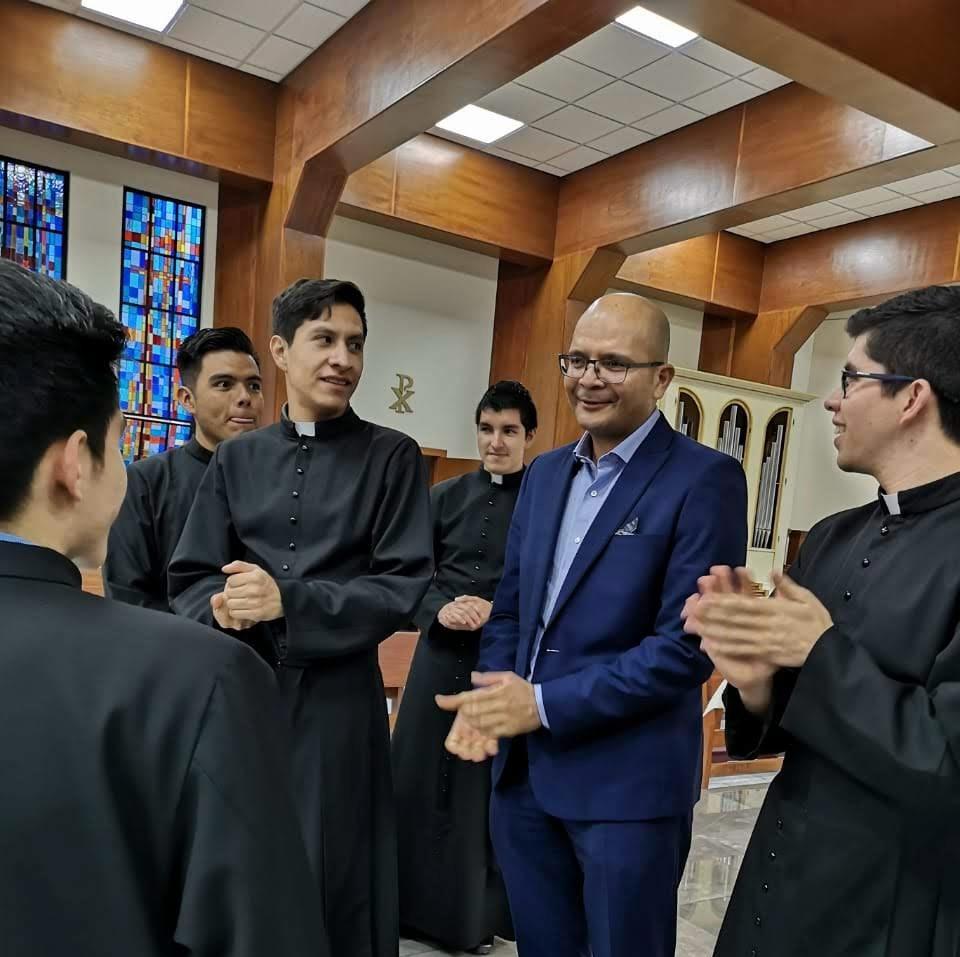
MORELIA, MEXICO — David Angeles Garnica, MD and PhD in Philosophy from the Pontifical Gregorian University in Rome, has made the interplay of philosophy, dialogue, and beauty the main thread of his life and work. Dedicated to examining the human soul, the nature of beauty, and the importance of genuine dialogue, he now teaches and leads the philosophy program at the IVQ Catholic University of Morelia.
Alongside his research in classical philosophy, aesthetics, and the intersection of medicine and philosophy, he balances academic life with family, sharing life with his wife, Janet, and their five-year-old son, José Pablo. Janet also lived at The Lay Centre for about a year and a half while they were already married, during the time Garnica was pursuing his studies in Rome. Also a medical doctor, she was a student of Spirituality at the same university.
“I would describe my experience at The Lay Centre as an opportunity, a blessing, a privilege,” Garnica recalls of his six years living in Rome. For him, the Centre was not only a place to study but also a space to form enduring friendships, engage in meaningful dialogue, and encounter ideas and perspectives from around the world.
As we prepare for our 40th anniversary in 2026–2027, The Lay Centre begins this series of alumni profiles.
A Formative Time in Rome
After a brief medical career in psychiatry, Garnica moved to Rome to pursue philosophy. At the Pontifical Gregorian University, he completed the full doctoral cycle and earned the prestigious Bellarmino Award for his dissertation, El caballo negro del Phaedrus (“The Black Horse of the Phaedrus“).
“The Gregorian taught me to approach any question historically and philosophically, considering perspectives from Scripture, the Church Fathers, and classical philosophy,” he says. This rigorous environment shaped a methodology that values both precision and openness, laying the foundation for his later teaching and research.
Community, Dialogue, and Friendship at The Lay Centre
Living at The Lay Centre provided Garnica with an academic experience that extended beyond the classroom. Daily routines, shared meals, sports, and prayer fostered friendships and authentic dialogue.
“In the Centre, dialogue wasn’t just about ideas; it grew out of friendship. You learned to listen, to understand, and to find common ground even with differences,” he explains.
These experiences continue to shape his work to this day. He emphasizes openness, collaboration, and respect in the classroom. “Even when we don’t fully agree, we can make progress together,” he adds.


Beauty, Courage, and Teaching Philosophy
The aesthetic dimension of the Centre—and of Rome itself—left a lasting impression. Gardens, architecture, and the rhythms of city life encouraged students to approach study and life with care and authenticity.
“I am obsessed with the courage of beauty,” Garnica reflects. “It takes bravery to engage with the new, the different, and the challenging. Pursuing what is beautiful in ideas and in life demands courage.”
This philosophy guides his teaching. Whether leading students through classical philosophy, ethics, or Plato, Garnica encourages them to see learning as an intellectual and personal journey. Lessons from the Centre—including openness, dialogue, and beauty—remain central to his approach.
Academic Contributions and Reflections on the Church
Beyond his time in Rome, Garnica has made significant contributions to academic life in Mexico. He has taught at multiple institutions, conducted research on metaphysics and aesthetics, and participated in international scholarly communities, including the International Plato Society. His work bridges philosophy and medicine, exploring ethical and reflective questions with practical impact.
He continues to reflect on the role of laypeople in the Church, emphasizing the importance of maturity, engagement, and meaningful contributions.
“We are called to a laity that is proactive, committed, and willing to offer their perspective,” he says.
These values underpin his approach to teaching, research, and service.
As he looks ahead, Garnica draws from these formative experiences in Rome and at The Lay Centre to shape environments that foster intellectual growth, personal development, and authentic dialogue. His journey illustrates a life dedicated to learning, friendship, and the courage to pursue what is beautiful and true—in both thought and action.
Photos: David Angeles Garnica
Text: Regina Hernández


