
By Viktoriia Havaleshko
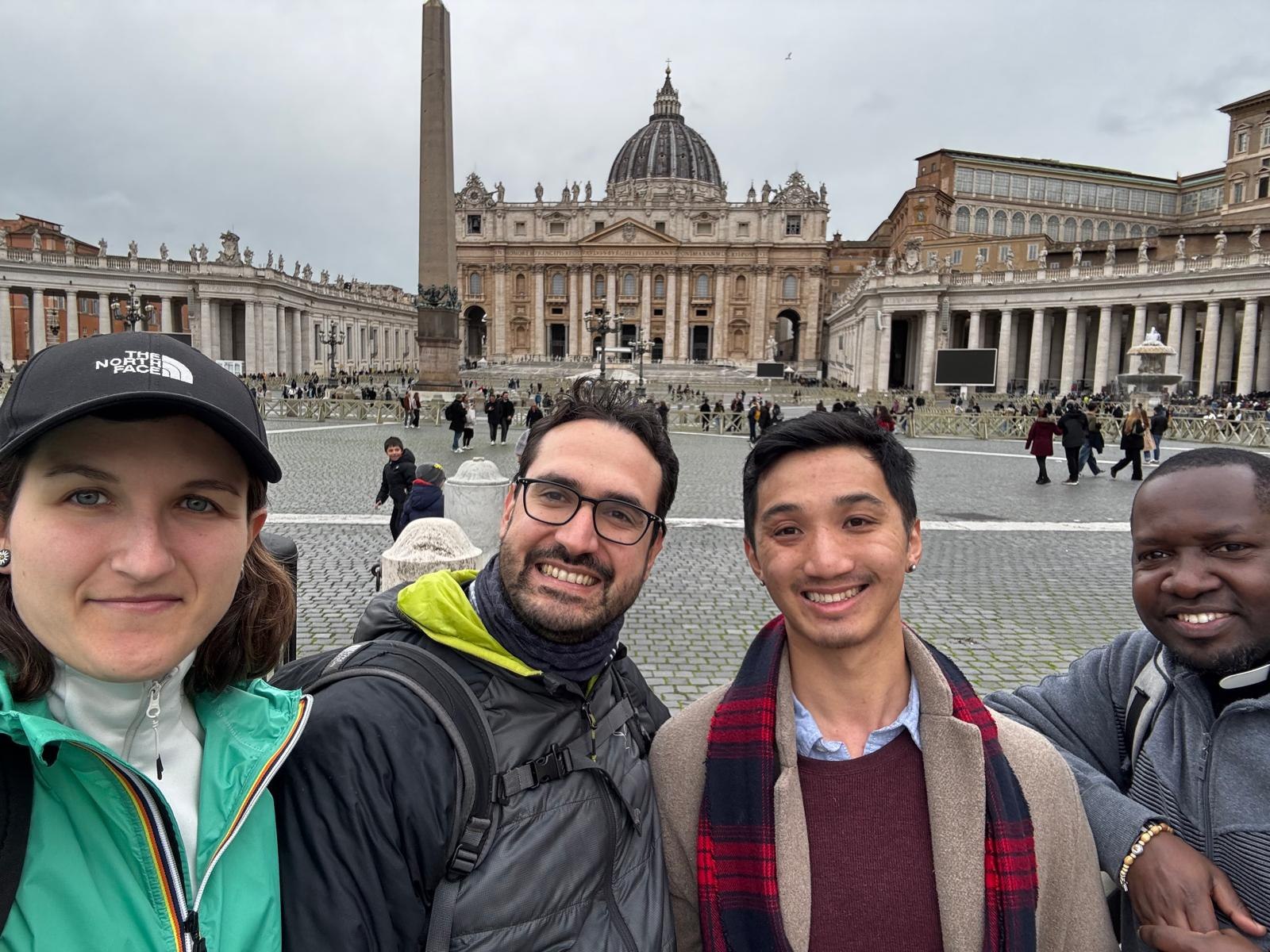
Some members of our community undertook the pilgrimage of the Seven Churches, an ancient Roman tradition initiated by Saint Philip Neri on Sunday, February 8.
In the 16th century, Philip Neri would gather with a few friends and set out on foot to visit and pray in some of Rome’s most important basilicas. In each church, he would pray, sing a hymn, and offer a short reflection. Over time, this simple initiative became a Roman living tradition.
The route of the pilgrimage includes the four major basilicas of Rome – St. Peter’s, in the Vatican, St. Paul Outside the Walls, St. John Lateran, and St. Mary Major – as well as three smaller ones: St. Sebastian Outside the Walls, the Holy Cross in Jerusalem, and St. Lawrence Outside the Walls. The full journey stretches for about 25 kilometers (15,6 miles) across the city, reaching even the ancient outskirts and the catacombs.
One of the community members, Francisco Samayoa, a Philosophy doctoral candidate from Guatemala described it this way:
“Living in Rome, it is easy to lose the sense of pilgrimage. You can go to a cathedral or basilica any day, while people from other parts of the world travel great distances to get there. This journey allowed us to rediscover the experience of being pilgrims. It was especially meaningful to walk this path together as a community, not remaining alone in prayer, but sharing it with one another as we walked along roads that carry centuries of history.”
We began our journey with a Holy Mass at Santa Maria Maggiore and continued step by step from one stop to the next. Another participant, Sara Staiano, a Safeguarding doctoral student from Naples, in Italy, shared how the experience felt from within:
“We had the opportunity not only to walk together but also to pray and share profound moments. Step by step, starting with the blessing in St. Mary Major and ending up touching the great columns surrounding St. Peter’s Square, we experienced the importance of moving forward with a common goal, the beauty of reaching each stage together, gratitude to God and the joy of arriving, after so much fatigue, at the final destination.”
Over nearly eight hours together, this journey became a space of encounter – with the history of the Church, with the people around us, and with our own faith. In addition, Darren Huang, a Bachelor’s student of History and Cultural Heritage of the Church from the United States emphasized how the pilgrimage deepened our sense of community:
“The pilgrimage of the Seven Churches was a deeply moving experience where through the 8 hours we were together, we bonded not only on a community level, but also on a deeper spiritual level. At each church we got to see not only the history of the buildings themselves but the living, breathing people of God. Through our pilgrimage, we walked through the city of Rome offering our hopes, prayers, and dreams for The Lay Centre before the Lord. I feel more united than before with my fellow community members, and I continue to pray for them even after the end of the pilgrimage.”


