By Viktoriia Havaleshko / Photo: Karina Gandur
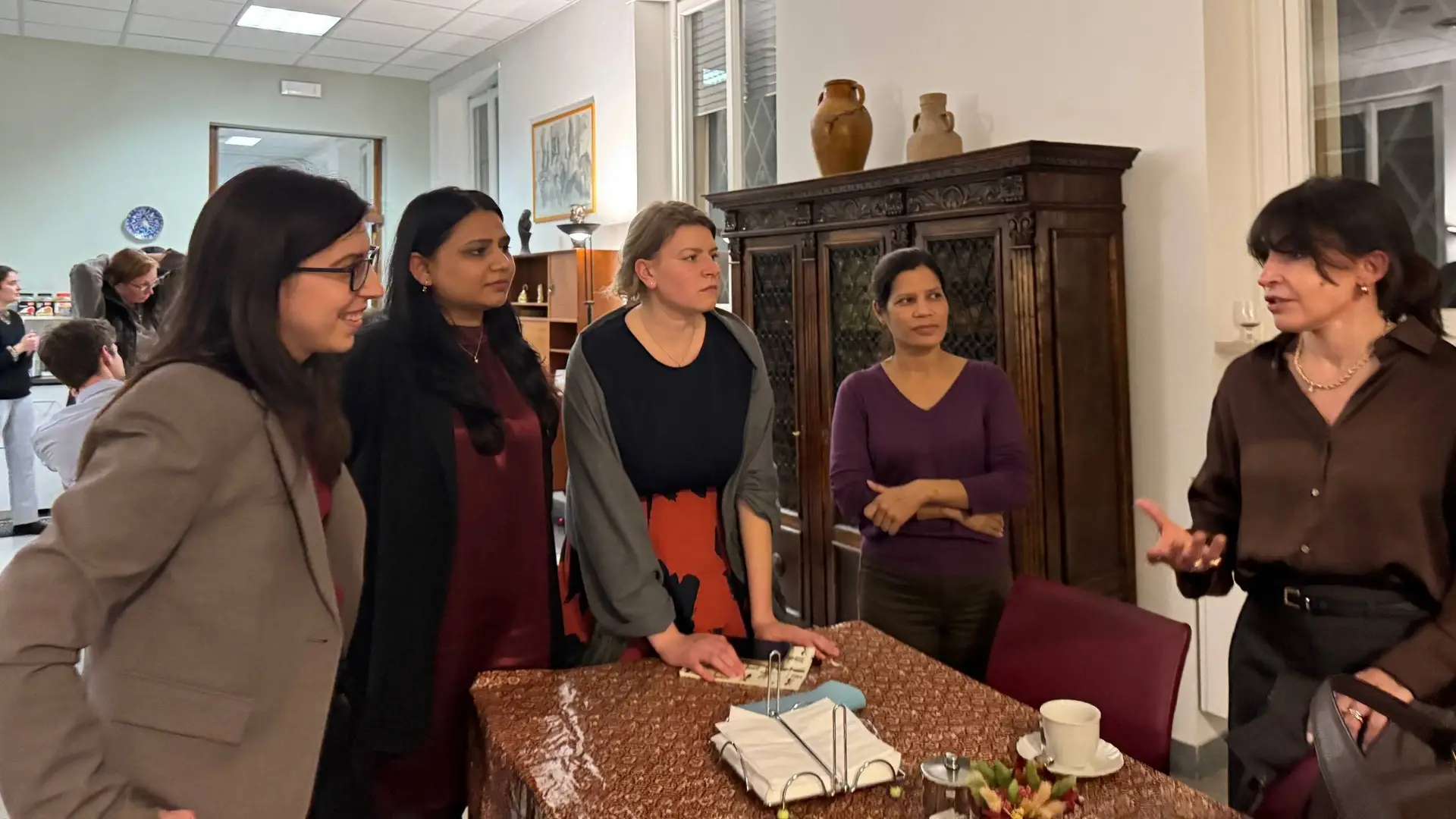
The Lay Centre welcomed Dr. Emilce Cuda, Secretary of the Pontifical Commission for Latin America, and the leadership of the International Union of Superiors General (UISG) during two community evenings to share their personal testimonies of service and leadership in the Church.
These encounters, held on March 4 and March 11, highlighted the essential role of a synodal approach and lay participation in addressing contemporary challenges such as poverty and migration.
By bringing together Vatican officials and international religious leaders, the community explored the transition from seeking personal recognition to embracing a vocation of service as “servants of all.”
The Strength of Women in Service
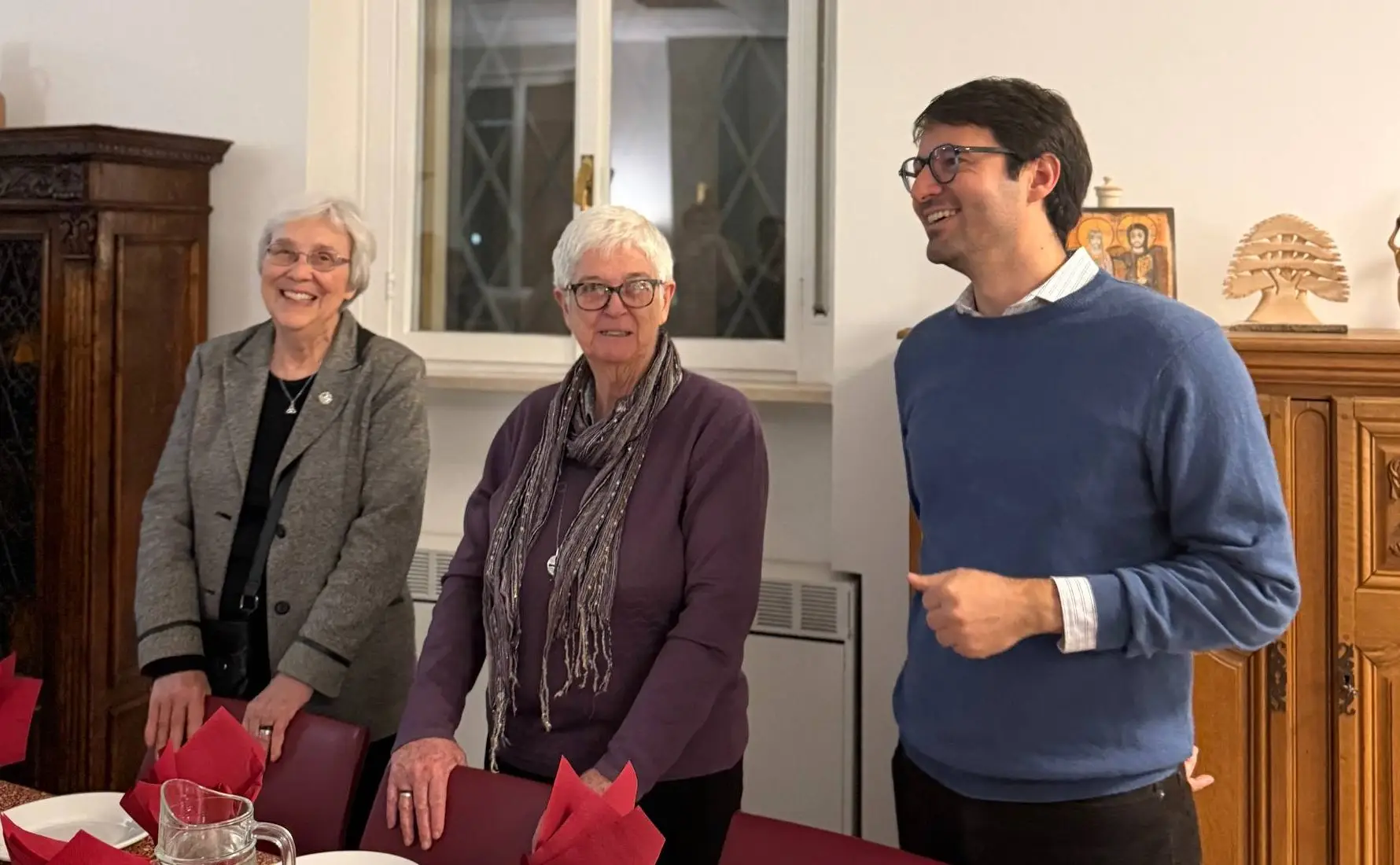
On March 11, the evening included a moment of dialogue on the richness of consecrated life and the diversity of charisms that shape religious communities today. Sr. Oonah O’Shea, NDS, President of the UISG, and Sr. Roxanne Schares, SSND, Executive Secretary of the UISG, were the guest speakers. They shared their global experiences, emphasizing the importance of supporting women’s leadership within religious communities worldwide.
Sr. Oonah reflected on her years of ministry in the Philippines, working with women in difficult circumstances and her collaboration with Vatican Dicasteries on safeguarding and migration.
Similarly, Sr. Roxanne discussed over forty years of service outside her home country, including her work in Kenya, focused on the education of young girls and refugee support. Through their shared witness, they illustrated the various paths through which individuals are called to become living witnesses of the Gospel in the world.
Mercy and Love as the Heart of the Law
During a liturgy presided over by Fr. Mario Loya, O. Carm., secretary of the Carmelite Institute, the community was invited to consider the true purpose of God’s law. Fr. Loya reminded the faithful that while the law is a gift intended for the human person, it remains a free choice for each individual to accept.
He further highlighted that the law cannot bear fruit without mercy, justice, and love. Drawing on the example of the Pharisees, he cautioned that even the most perfect observance of rules loses its meaning if the ultimate goal—the well-being of the person—is forgotten. The community was encouraged to enter the depths of the heart, as he explained that it is only through prayer and inner silence that the truth for one’s life is truly born.
Service at the Heart of the Church
Following a shared meal, on March 4, Dr. Emilce Cuda shared her experiences of serving in the Vatican, addressing the complexities of working within a multicultural environment. She outlined the Commission’s dedication to strengthening faith and supporting evangelization while addressing the effects of globalization.
Dr. Cuda particularly emphasized the importance of synodality, noting that the active participation of the laity is vital for social reconciliation and the building of fraternity.
During the celebration of the Eucharist, Fr. Diego Meza, director of Caritas Ipiales and a professor of Social Sciences at the Pontifical Gregorian University, noted during his reflection that being in Rome represents a unique time for both inner searching and outward service. He explained that while many come to the center of Christianity looking for opportunities to serve with their talents, true vocation lies in following the path shown by Christ, where the greatest must become the servant of all.


