
By Viktoriia Havaleshko
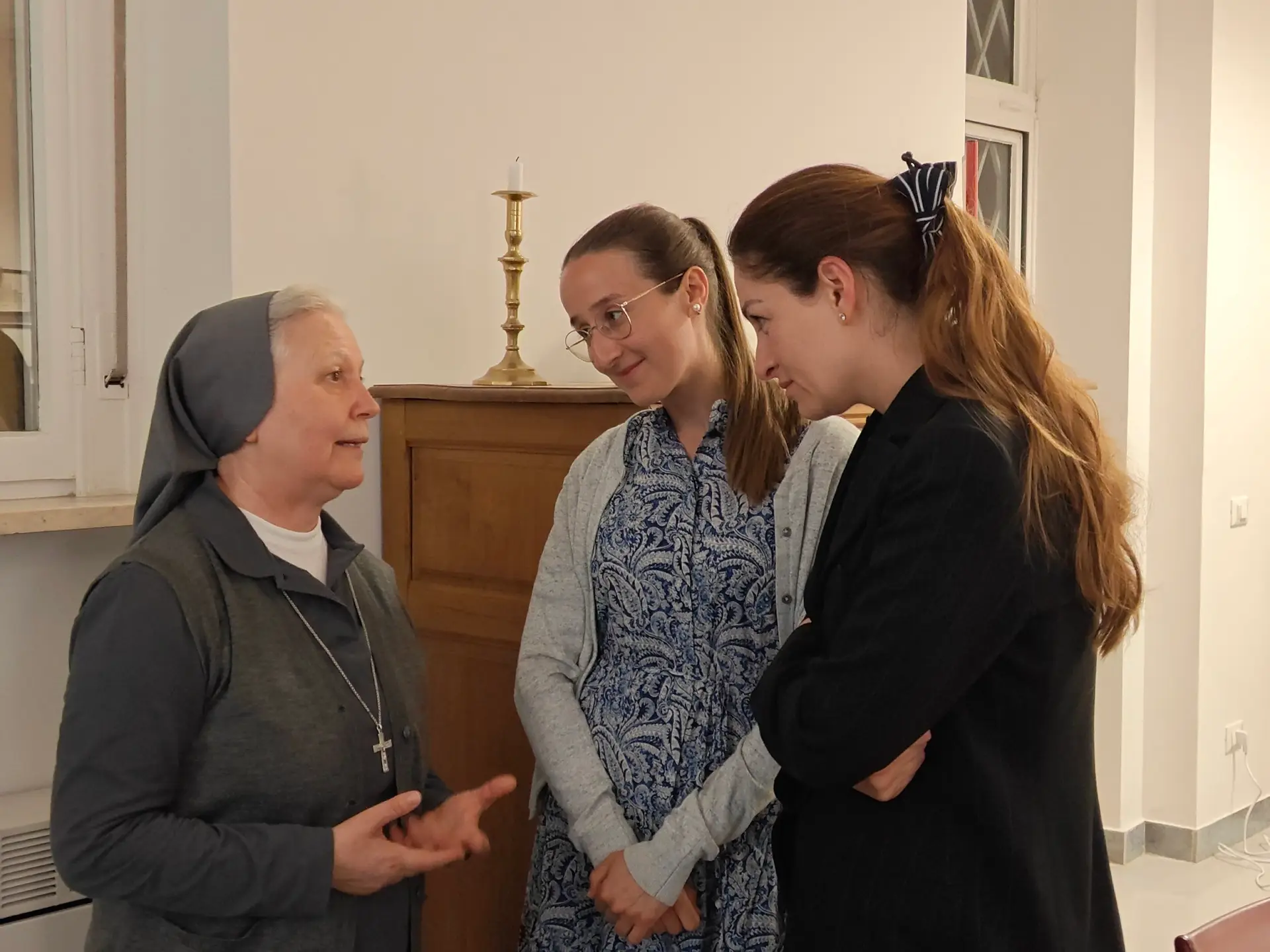
The Lay Centre community gathered on Thursday, April 23, for an evening of dialogue with Sister Grazia Loparco, FMA, a Salesian Sister and History professor at the Pontifical Faculty of Educational Sciences “Auxilium.” Sister Loparco presented her extensive archival research into a lesser-known chapter of modern Italian church history: the religious sisters who risked their lives within the Italian Resistance during the Second World War.
The presentation followed the community Mass, which was celebrated by Father Francisco Martins, SJ, Professor at the Pontifical Biblical Institute.
A Legacy of Preserving Human Life
Sister Loparco’s research involved a detailed examination of diaries, letters, and community chronicles from various religious houses in Rome. Written both immediately after the liberation of Italy and in the decades that followed, these documents record the actions of women who sheltered Jews, partisans, allied prisoners of war, and persecuted anti-fascists at immense personal risk.
Her findings highlight how various convents and community houses across Italy transformed into neutral spaces of refuge, welcoming individuals regardless of their background, faith, or political allegiance. Among the archival discoveries was a letter from a Jewish general sent to the Pope in July 1944, formally expressing gratitude for the vital sanctuary and assistance provided by the sisters.
Humanity Over Political Factions
A central theme of Sister Loparco’s presentation was that the majority of these sisters did not view their actions through a political lens. Rather than engaging in a partisan struggle, their choices were driven by basic humanity, Christian responsibility, and an fundamental desire to protect human life. This perspective was exemplified by one religious sister who, upon receiving a postwar honor, noted that she was not a partisan of any political faction, but rather a “partisan of Christ”.
Sister Loparco noted that most of these women rejected the label of heroism, often maintaining after the war that they had simply fulfilled their duty. In circumstances of extreme danger, they felt a quiet compulsion to respond directly to the immediate human needs before them.
The evening concluded with an invitation for residents to consider how these historical testimonies translate to modern Christian witness. Sister Loparco observed that during a profound societal crisis, these women looked past institutional formalities and personal safety.
Ultimately, the discussion emphasized that Christian identity can awaken unexpected courage, demonstrating that religious devotion finds its most authentic expression when human dignity requires protection.
Image Credit: Anastasia Pinto


