
By Viktoriia Havaleshko
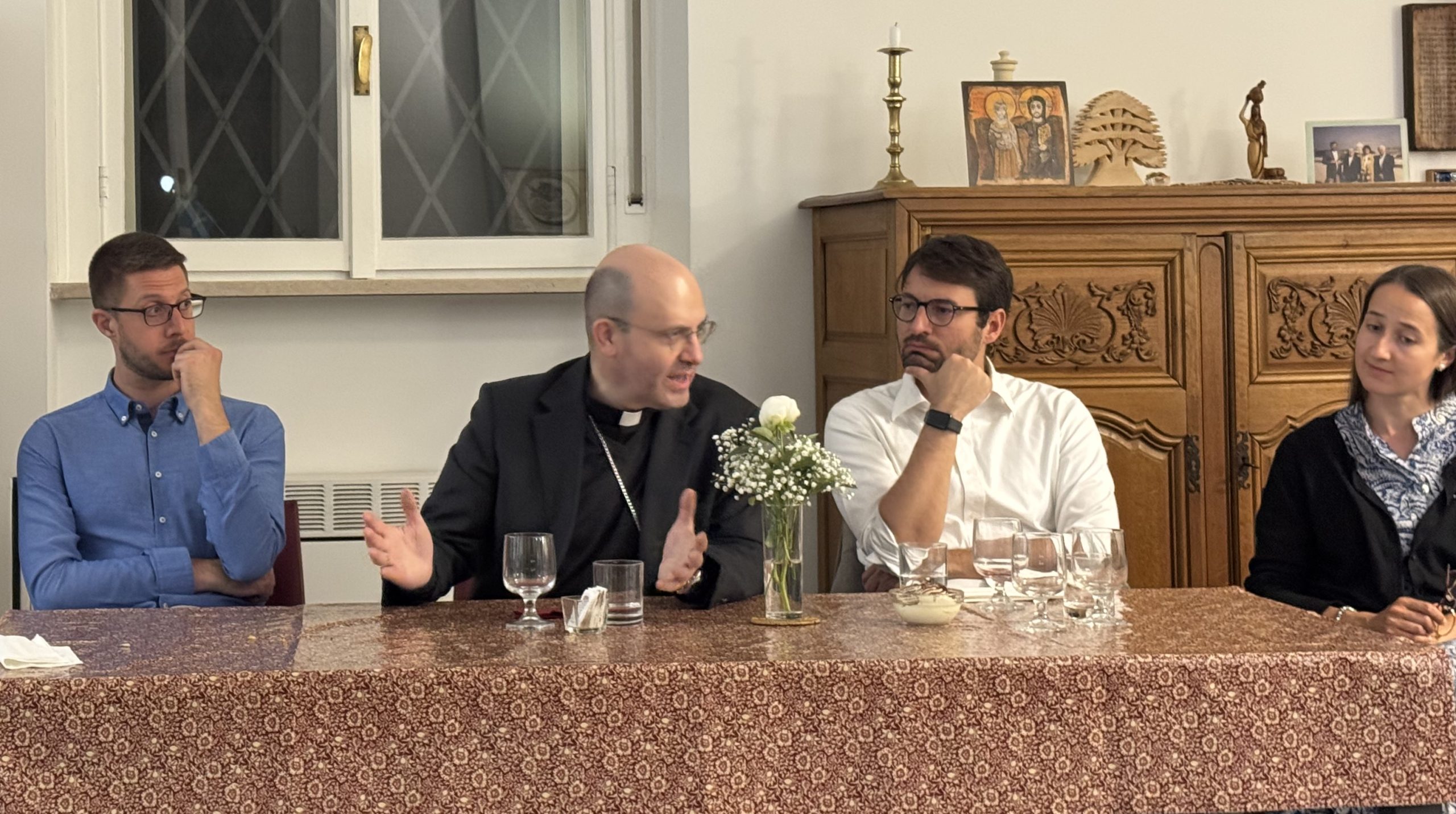
Archbishop Samuele Sangalli joined The Lay Centre community on May 6 and engaged in a lively discussion on the Church’s missiological landscape and his service within the Roman Curia. As Adjunct Secretary of the Dicastery for Evangelization, he is responsible for administrative matters regarding the mission territories of the Church.
According to the Apostolic Constitution Praedicate Evangelium (2022), the Dicastery is uniquely tasked with overseeing the work of first evangelization and the continuous renewal of faith, ensuring that the Church grows dynamically as Christ’s Mystical Body.
The evening offered residents a firsthand perspective on how global ecclesial governance directly animates local missionary activity.
The Gospel to the Ends of the Earth
Following dinner, Archbishop Sangalli shared about his vision of the Church’s mission in the contemporary world. During the dialogue, the Archbishop focused particularly on the Church’s pastoral care and mission where Christian communities are still emerging or experiencing rapid growth.
He detailed the strategic initiatives of the Holy See, including the establishment of new apostolic nunciatures, support for young dioceses, and the provision of crucial financial assistance to local Churches across Africa, Oceania, and the Amazon region.
Special attention was also given to the work of the Section for Fundamental Questions of Evangelization in the World. The Archbishop highlighted how this section rigorously studies the shifting cultural and digital contexts of contemporary society, seeking creative, intellectually grounded pathways to proclaim the Gospel effectively to modern humanity.
The Fullness of Life in Christ
In his homily, Archbishop Sangalli reflected on the profound Johannine imagery of the vine and the branches. Meditating on Christ’s words, “I am the vine; you are the branches,” he emphasized that authentic Christian life is possible only through a profound union with the Lord.
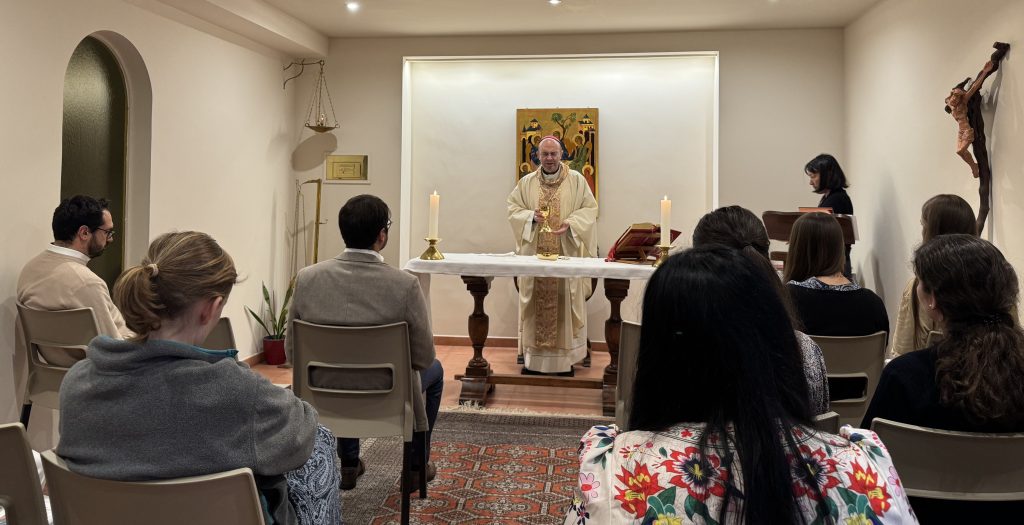
Drawing a parallel to the tangible realities of viticulture, the Archbishop noted that the spiritual life mirrors the natural world: a branch severed from its source inevitably withers. Conversely, he observed that the vine itself “weeps bitterly” during the pruning process, releasing its life-giving sap to ensure future growth.
He emphasized that without a deep union with Jesus, and without the sap of His Word and love continually flowing through our souls, we are unable to build anything truly good. He noted that nothing of lasting value can leave a transformative mark on our own lives or the lives of others without this foundational connection.
The Archbishop gave particular attention to the necessity of divine pruning in the human journey. While periods of loss, trial, and interior desertness are often difficult to navigate, he reminded the community that it is precisely through these moments that the Lord purifies His disciples, preparing them to bear more abundant fruit.
He concluded with an invitation to personal examination, encouraging the residents to consider whether they truly abide in the Word of God and allow it to cultivate the fullness of joy that Christ promises.


